
Triphosphates is the acidity regulator the food industry lists as E451. In our table it is high risk: it takes 30 of the 33 additive points off a product's score for a child.
- High risk. 30 of the 33 additive points come off a product that carries it.
- Flagged for young children. Set only where EFSA’s own exposure assessment shows toddlers or children exceeding or approaching the ADI, or where a regulator used explicitly child-specific language. For a child under 6 it moves one class up.
- 2 citations from EFSA, each one below.
What Triphosphates does to a score
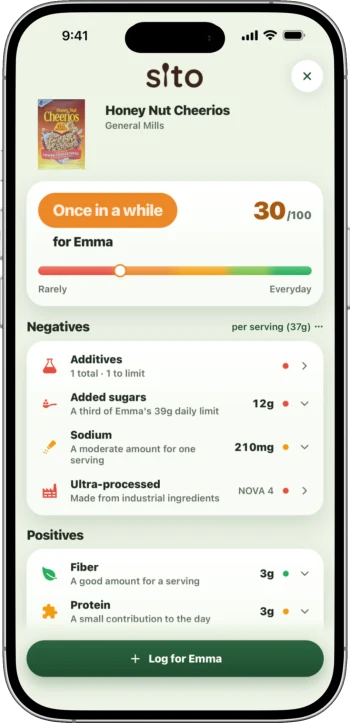
A packaged food starts with 33 points for what is in its ingredient list. Triphosphates takes 30 of the 33 additive points off a product's score, and a child under 6 sees it one class higher again. Scan the pack in Sito and the score you get is the one for your own child's age, with this additive named in the reasons. How we score has the whole method.
What the sources found
Every classification in our table comes from the citations below, and nothing else. They are quoted as the source wrote them.
-
EFSA
Journal 2019;17(6):5674 — doi:10.2903/j.efsa.2019.5674
Group ADI 40 mg P/kg bw/day; mean exposure may exceed the ADI in infants, toddlers and children. -
EFSA
news release 190612, 12 June 2019
EFSA advises numerical maximum levels and flags reduced-kidney-function populations as outside the ADI.
Why this class
IARC Group 1 or 2A with a dietary exposure route; or EFSA has withdrawn or negated a safety conclusion; or EFSA’s own exposure assessment finds a child age group exceeding the ADI at mean intake; or the substance is banned or formally being phased out for food use by the EU, by the US FDA, or under a US state law.
Our confidence in this row's classification is high. Medium or low does not mean the evidence is weak; it means something about the row is still being pinned down, usually a regulatory status confirmed from one source rather than two.
See what is in your own cupboard
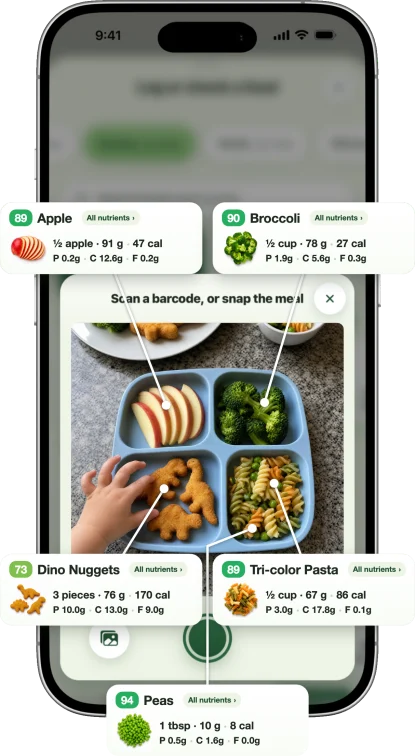
Scan a packaged food and Sito names the additives in it, then scores the product out of 100 for your child's age.
Other acidity regulators in the table
- Sodium phosphates (E339), high risk
- Potassium phosphates (E340), high risk
- Calcium phosphates (E341), high risk
- Magnesium phosphates (E343), high risk
- Diphosphates (E450), high risk
- Polyphosphates (E452), high risk