- Baby-led weaning means your baby feeds themselves soft finger foods, and you can still use a spoon.
- Start around 6 months, not before 4, once your baby sits up, picks food up and swallows it.
- Sito, our app, shows how to cut and serve each first food at your baby's age, and lets you log every taste.
Baby-led weaning with Sito: each first food's shape at your baby's age
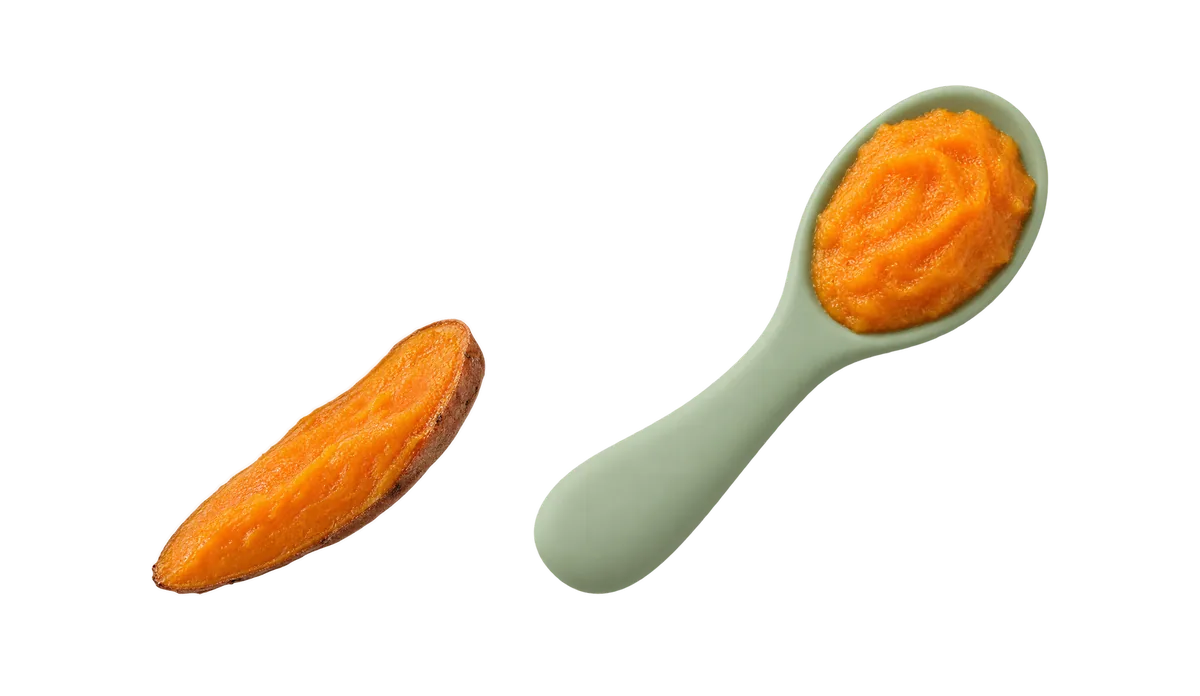
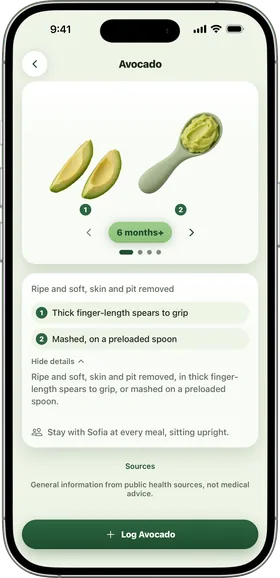
Sito shows how to cut and serve each of 583 foods at your baby's age. From 4 months, its "Ready for solids?" card lists the three signs, and you tap "We started today" when you see them.
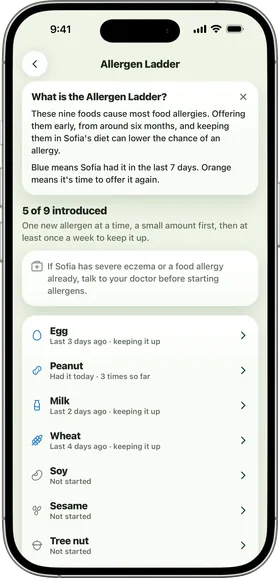
A quick log records how much, the texture and how it went. The Allergen Ladder takes 9 allergens one at a time, with a check-in after each. A doctor report in six languages lists the allergens, reactions and foods tried. More on our baby page.
See how to serve each first food at your baby's age
Add your baby and Starting Solids opens at 4 months. Free to download, free to try.
What is baby-led weaning (BLW)?
Baby-led weaning (BLW) means giving your baby only finger foods and letting them feed themselves from the start, instead of being spoon-fed (NHS). Some parents also spoon-feed: the NHS says there is no right or wrong way, and the AAP says you can flex the baby-led concept (AAP). Breast milk or formula stays the main drink in the first year (NHS).
When to start baby-led weaning: 3 signs your baby is ready
The CDC says solids can start at about 6 months, and before 4 months is not recommended (CDC). The AAP says babies are usually ready around 6 months, some as early as 4 (AAP). The NHS says around 6 months, when three signs appear together:
- Sits up and holds their head steady.
- Looks at food, picks it up and puts it in their mouth.
- Swallows food rather than spitting it back out.
If your baby was born early, has trouble sitting up on their own, or struggles to chew and swallow even soft solids, the AAP says it is better to wait. It also suggests checking in with your pediatrician before starting (AAP).
How to start baby-led weaning
- Sit your baby upright in a high chair, harness buckled, so they can swallow properly (AAP, NHS).
- Always stay with your baby while they eat (NHS).
- Start with a small amount, once a day (NHS). See how much a 6 month old should eat and our feeding schedule by month.
- Choose foods your baby can mash with their gums or chew with just a few teeth (AAP).
- Offer one single ingredient food at a time, 3 to 5 days apart, and look out for reactions (AAP, CDC).
- Stop when your baby closes their mouth or turns away. Do not force it; a new food may take 10 tries or more (NHS).
Advice on size differs. The NHS says pieces big enough to hold in a fist with a bit sticking out. The AAP's BLW page says finger-shaped, like a small baby carrot, never round, coin-shaped slices. Its choking page says no piece larger than half an inch (AAP), and the CDC suggests foods that dissolve with saliva. Our table follows the NHS.
Baby-led weaning first foods for 6 months
Here are 13 first foods from our starting solids guide, as Sito shows them at 6 months.
| Food | At 6 months | Choking risk | Allergen | Iron-rich |
|---|---|---|---|---|
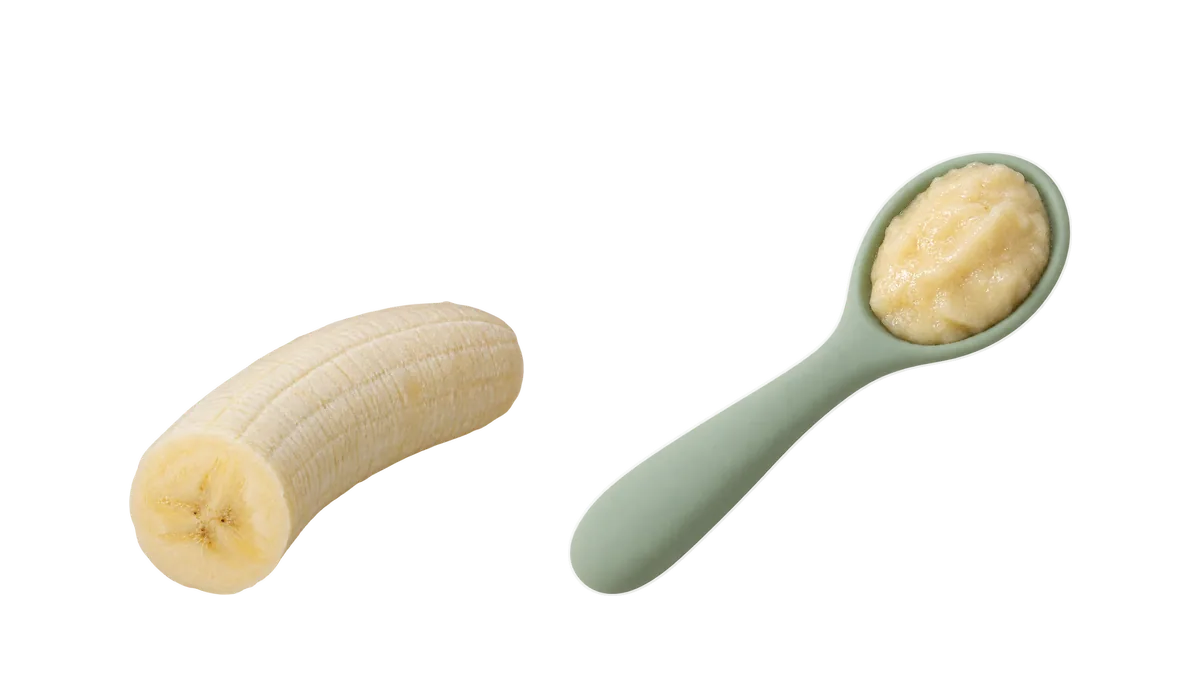
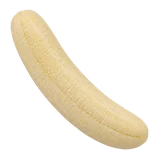 Banana | Half a ripe banana, fully peeled; or mashed, on a preloaded spoon | |||
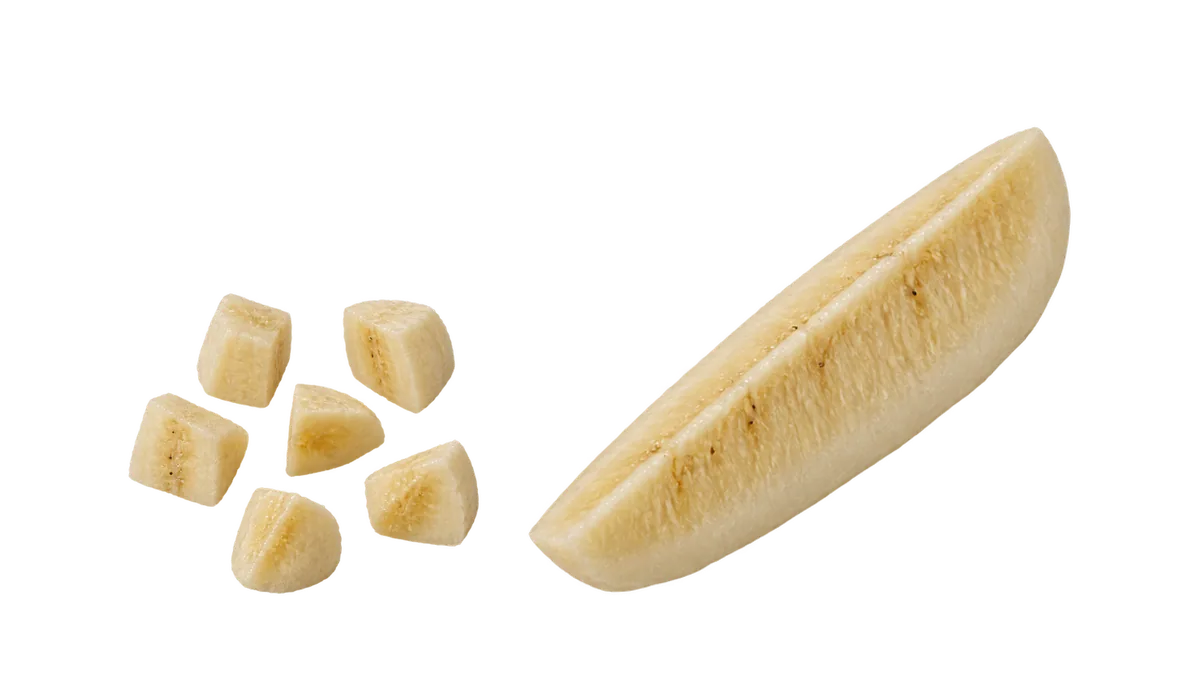
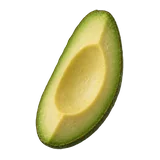 Avocado | Thick finger-length spears to grip; or mashed, on a preloaded spoon | |||
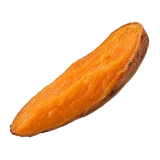 Sweet potato | Finger-length wedges; or mashed onto a preloaded spoon | |||
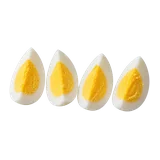 Egg | An omelet strip to hold; or hard-boiled, mashed smooth | Egg | Yes | |
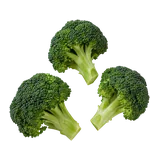 Broccoli | A whole floret, held by its stalk, steamed until soft enough to squash; or mashed | Until 4 (hard when raw) | ||
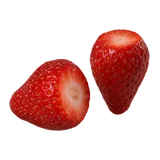 Strawberry | Mashed into yogurt or porridge; or a whole huge soft ripe berry, hulled | Until 4 (small berries are round and firm) | ||
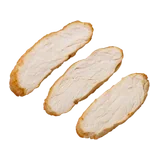 Chicken | A long flat strip to gnaw; or shredded fine, mixed into mash | Until 4 (chewy in chunks) | Yes | |
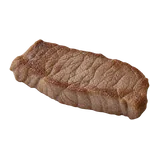 Steak | A strip about 7 cm long, to gnaw; or minced fine into mash | Until 4 (chewy and firm in chunks) | Yes | |
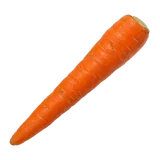 Carrot | Thick finger-length sticks, cooked until soft enough to squash | Until 4 (hard when raw) | ||
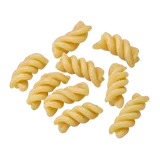 Pasta | Big tubes like rigatoni or penne | Wheat | ||
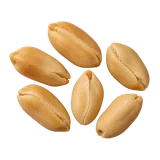 Peanut | Smooth peanut butter, thinned; or finely ground peanuts, no bits left | Whole peanuts until 5 | Peanut | |
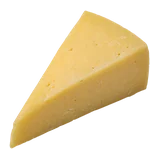 Cheese | A long thin flat slice, 2 fingers wide; soft cheese spread thin on toast; or grated lightly into warm food | Until 4 (firm in chunks) | Milk | |
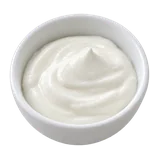 Yogurt | On a preloaded spoon to grab | Milk |
Is baby-led weaning safe? Gagging vs choking
The AAP says little ones can choke, and online videos of babies biting into a whole chicken leg are dangerously misleading (AAP). The NHS says there is no more risk of choking when a baby feeds themselves than when fed with a spoon (NHS).
A randomized trial of 206 babies compared usual care with a form of baby-led weaning that included advice on minimizing choking risk. Between 6 and 8 months, 35% of babies choked at least once, with no significant difference between groups. The authors found it concerning that many babies in both groups were offered foods that pose a choking risk (Fangupo et al.).
- Gagging is loud. It is a normal reflex. Eyes may water, the tongue may push forward, and your baby may retch or vomit (NHS).
- Choking is quiet. White skin may begin to look blue. On brown or black skin, check the gums, inside of the lips or fingernails (NHS).
Your baby may be choking and need help right away if they cannot breathe, cannot cry or make noise, turn bluish or go limp (AAP). The Red Cross lists "weak or no cough" and "high-pitched squeaking noises or no sound" among signs that need immediate emergency treatment. Call 911 (999 in the UK, 000 in Australia) and follow the Red Cross infant choking steps. If your baby is coughing loudly, encourage them to keep coughing and do not leave them. After first aid, get medical help even if the object has come out (NHS). The AAP advises taking a certified CPR and first aid course.
Foods to avoid with baby-led weaning
Until age 4 or older, the AAP keeps high-risk foods away, including hot dogs, nuts and seeds, whole grapes, raw carrot sticks, raw apple chunks, popcorn, thick chunks of nut butter, marshmallows, and chunks of meat or cheese. Round, firm foods like grapes can be served if completely chopped into tiny pieces (AAP). The NHS says to quarter small round foods, remove pips and bones, and keep whole nuts out until 5, as our guide does (NHS). No honey before 12 months, since it may cause botulism, not even on a pacifier. The CDC also says no added sugars before 24 months, so our honey page waits until 2 (CDC). No juice or cow's milk to drink before 12 months (CDC).
Pros and cons of baby-led weaning
Advocates point to independence, more flavors, whole foods and motor skills, but the AAP notes very few studies on these health advantages (AAP).
Besides choking, the AAP warns that a baby who turns away from meats and cheeses may miss the food energy needed for healthy growth, and that favorite foods might not have enough iron. Include foods with iron and zinc, such as meat or iron-fortified cereal (AAP). See our iron rich foods for babies.
Allergens
If your baby has severe eczema or an egg allergy, talk with their doctor before giving peanut (CDC, NIAID, AAP). ASCIA, for Australia and New Zealand, puts it differently: all babies, including those with eczema, should have common allergens like egg and peanut by 12 months. Swollen lips, face or tongue, hives, vomiting, difficult or noisy breathing, or a pale and floppy baby: stop the food and get medical advice. Call 911 (999 in the UK, 000 in Australia) right away for any sign of a severe allergic reaction (anaphylaxis). Reactions usually show within minutes to two hours (ASCIA). More in our guide to introducing allergens.
Frequently asked questions about baby-led weaning
What is the 4 day rule for baby-led weaning?
None of the health authorities we cite use that name. The closest advice is to offer one single ingredient food at a time and wait 3 to 5 days before the next, looking out for reactions (AAP, CDC). The NHS says foods with allergens, such as peanuts and eggs, can be introduced from around 6 months, one at a time and in small amounts. ASCIA says one new allergen per meal, then, once tolerated, at least once a week.
Do pediatricians recommend baby-led weaning?
The AAP neither tells parents to do it nor tells them not to. It says there are very few studies on the health advantages, and it names three risks: choking, too little food energy if a baby turns away from meats and cheeses, and too little iron. It also says purees can be nutritious and you can flex the approach. It suggests checking in with your pediatrician before starting (AAP).
Is it okay to start baby-led weaning at 4 months?
The sources differ. The AAP says babies are usually ready around 6 months, and some as early as 4 (AAP). The CDC says starting before 4 months is not recommended (CDC), and the NHS looks for three signs together from around 6 months (NHS). ESPGHAN says the skills to swallow purees from a spoon typically appear between 4 and 6 months, while the skills to feed themselves, as baby-led weaning asks, appear later in the first year (ESPGHAN). Check in with your pediatrician before starting (AAP).
Is 8 months too late to start baby-led weaning?
Not for finger foods. ESPGHAN says babies should be eating lumpy foods by 8 to 10 months at the latest, so 8 months is inside that window. ESPGHAN also says solids should not be delayed beyond 6 months (ESPGHAN), so if your baby has had no solids yet, check in with your pediatrician before you start (AAP). Next step: our 7 and 8 month feeding schedule.
Can you do baby-led weaning without teeth?
Yes. The AAP says foods your baby can mash with their gums or chew with just a few teeth are perfect (AAP). The table above shows the shapes for 13 foods at 6 months.
Can you mix purees and baby-led weaning?
Yes. The NHS says some parents combine both and there is no right or wrong way. The AAP suggests a baby-safe spoon for soft foods and says you can flex the baby-led concept (AAP). Most rows in our table also give a mashed or spoon option.
What does weaning mean in baby-led weaning?
The NHS says introducing solid foods is sometimes called weaning or complementary feeding (NHS). The AAP describes baby-led weaning as slowly changing how an infant eats, from only breast milk or formula to a mixed diet that includes some solid foods (AAP). Solids come alongside breast milk or formula, which the NHS says should be the main drink during the first year.
Is there an app for baby-led weaning?
Sito, our app, covers starting solids from 4 months. The "Ready for solids?" card lists the three signs, then each of 583 foods shows how to cut and serve it at your baby's age. A quick log lets you record every taste, the Allergen Ladder takes 9 allergens one at a time with a check-in after each, and a doctor report lists the allergens and foods tried. See it on our baby page.
Sources
- American Academy of Pediatrics (HealthyChildren.org), Baby-Led Weaning: Is It Safe?
- American Academy of Pediatrics (HealthyChildren.org), When Can Babies Start Solid Foods? Readiness & Feeding Tips
- American Academy of Pediatrics (HealthyChildren.org), Choking Prevention for Babies & Children: What Every Parent Needs to Know
- Centers for Disease Control and Prevention (CDC), When, What, and How to Introduce Solid Foods
- Centers for Disease Control and Prevention (CDC), Foods and Drinks to Avoid or Limit
- NHS, Your baby's first solid foods
- NHS, Foods to avoid giving babies and young children
- NHS Best Start in Life, From around 6 months
- NHS Best Start in Life, Choking and gagging on food
- NHS, How to stop a child from choking
- American Red Cross, Infant Choking: How To Help
- Australasian Society of Clinical Immunology and Allergy (ASCIA), How to Introduce Solid Foods to Babies for Allergy Prevention
- National Institute of Allergy and Infectious Diseases (NIAID), Addendum Guidelines for the Prevention of Peanut Allergy in the United States: Summary for Parents and Caregivers
- ESPGHAN Committee on Nutrition (Fewtrell et al.), Complementary Feeding: A Position Paper, Journal of Pediatric Gastroenterology and Nutrition, 2017
- Fangupo et al., A Baby-Led Approach to Eating Solids and Risk of Choking, Pediatrics, 2016 (PubMed)