
Sodium aluminium phosphate is the acidity regulator the food industry lists as E541. In our table it is moderate risk: it takes 15 of the 33 additive points off a product's score for a child.
- Moderate risk. 15 of the 33 additive points come off a product that carries it.
- Flagged for young children. Set only where EFSA’s own exposure assessment shows toddlers or children exceeding or approaching the ADI, or where a regulator used explicitly child-specific language. For a child under 6 it moves one class up.
- 3 citations from EFSA, Law, FDA, each one below.
What Sodium aluminium phosphate does to a score
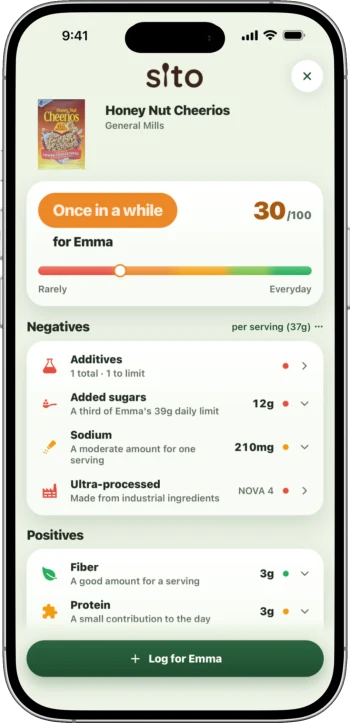
A packaged food starts with 33 points for what is in its ingredient list. Sodium aluminium phosphate takes 15 of the 33 additive points off a product's score, and a child under 6 sees it one class higher again. Scan the pack in Sito and the score you get is the one for your own child's age, with this additive named in the reasons. How we score has the whole method.
What the sources found
Every classification in our table comes from the citations below, and nothing else. They are quoted as the source wrote them.
-
EFSA
Journal 2018;16(7):5372 — doi:10.2903/j.efsa.2018.5372, Re-evaluation of aluminium sulphates (E 520–523) and sodium aluminium phosphate (E 541)
No safety concern at current EU authorised uses (near-zero exposure); P95 aluminium exposure up to 0.88 mg/kg bw/day in toddlers and children was judged highly uncertain because the niche products are not captured in EU consumption surveys. -
Law
Commission Regulation (EU) No 380/2012 (conditions of use for aluminium-containing food additives), EUR-Lex CELEX:32012R0380
Restricted all aluminium additives for consumer protection and de-authorised E 556/E 558/E 559; recitals rest on EFSA's 1 mg/kg bw/week TWI being 'generally exceeded for high consumers, especially children'. E 541 as a raising agent survives only for one sponge-cake type at 0.4 g/kg. -
FDA
Substances Added to Food inventory — sodium aluminum phosphate
Permitted in the US as a leavening acid and processed-cheese emulsifier with no aluminium-specific intake limit.
Why this class
IARC Group 2B; or an EFSA re-evaluation that flagged genotoxicity data gaps, found safety could not be assessed on the available data, or cut the ADI citing child exposure; or an EU harmonised classification of the substance as a reproductive or developmental hazard; or an EU withdrawal of one authorised food use while others remain; or an OEHHA/Proposition 65 listing; or membership of the Southampton-six colourants.
Our confidence in this row's classification is medium. Medium or low does not mean the evidence is weak; it means something about the row is still being pinned down, usually a regulatory status confirmed from one source rather than two.
See what is in your own cupboard
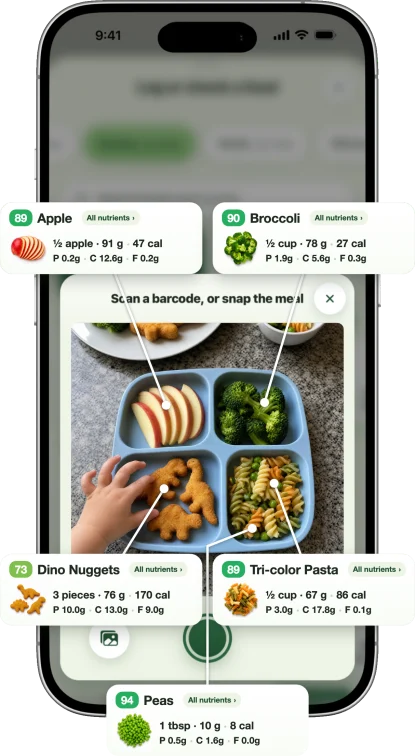
Scan a packaged food and Sito names the additives in it, then scores the product out of 100 for your child's age.
Other acidity regulators in the table
- Glucono-delta-lactone (E575), no risk identified
- Ammonium carbonates (E503), low risk
- Aluminium sulphate (E520), moderate risk
- Aluminium sodium sulphate (E521), moderate risk
- Aluminium potassium sulphate (E522), moderate risk
- Aluminium ammonium sulphate (E523), moderate risk