
Potassium tartrates is the acidity regulator the food industry lists as E336. In our table it is no risk identified: it takes no points off a product's score for a child.
- No risk identified. No regulator finding we score, so a product keeps all 33 additive points.
- No child flag. Nothing below is written about children specifically, so the class is the same at every age.
- 1 citation from EFSA, each one below.
What Potassium tartrates does to a score
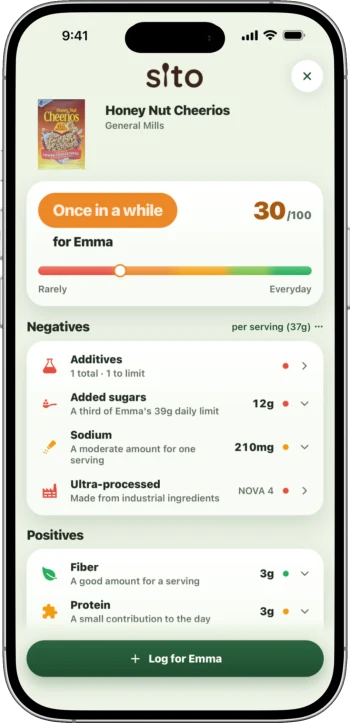
A packaged food starts with 33 points for what is in its ingredient list. Potassium tartrates takes no points off a product's score. Scan the pack in Sito and the score you get is the one for your own child's age, with this additive named in the reasons. How we score has the whole method.
What the sources found
Every classification in our table comes from the citations below, and nothing else. They are quoted as the source wrote them.
-
EFSA
Journal 2020;18(3):6030 — doi:10.2903/j.efsa.2020.6030
Group ADI 240 mg/kg bw/day as tartaric acid for E 334–337 and E 354; no safety concern at reported uses and use levels for any population group.
Why this class
Clean current EFSA and FDA status. These rows exist so that an unfamiliar additive is never treated as a bad one: a missing row costs a product nothing, and a clean row says so with citations.
Our confidence in this row's classification is high. Medium or low does not mean the evidence is weak; it means something about the row is still being pinned down, usually a regulatory status confirmed from one source rather than two.
See what is in your own cupboard
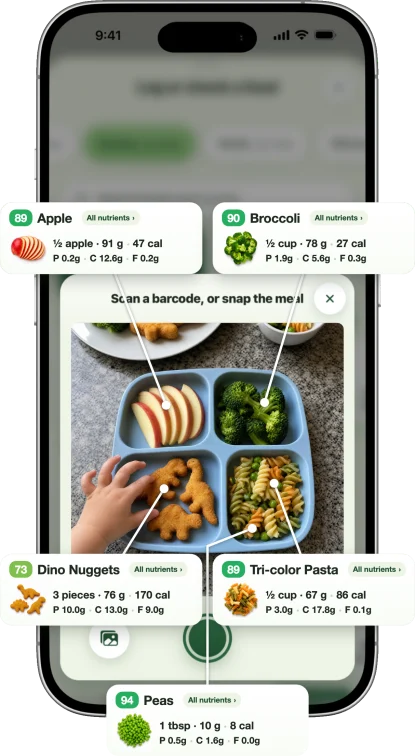
Scan a packaged food and Sito names the additives in it, then scores the product out of 100 for your child's age.
Other acidity regulators in the table
- Ammonium chloride (E510), no risk identified
- Sodium sulphates (E514), no risk identified
- Calcium sulphate (E516), no risk identified
- Ammonium sulphate (E517), no risk identified
- Sodium hydroxide (E524), no risk identified
- Glucono-delta-lactone (E575), no risk identified