
Babies can eat apples from 6 months, when they start solids. Apples are a choking risk until age 4 (hard when raw), so serve them in the shape for your baby's age below. At 6 months: baked or steamed until it squashes between finger and thumb, in finger-length wedges, peeled and cored, or grated and cooked soft in a bowl. Why so big: babies this age grab with the whole hand, so a finger-sized piece with a bit sticking out of the fist is easiest to hold and gnaw, and gnawing helps them learn to chew. Feeding themselves carries no more risk of choking than being fed with a spoon; always stay with your baby while they eat.
- Other names and forms
- eating apple, cooking apple, apple slice and honeycrisp apple
- Start
- 6 months, when solids begin
- Choking risk
- Until age 4 (hard when raw)
- Common allergen
- Not one of the nine major allergens
- Textures
- Mashed and finger food
How to cut and serve apples by age
6 to 8 months
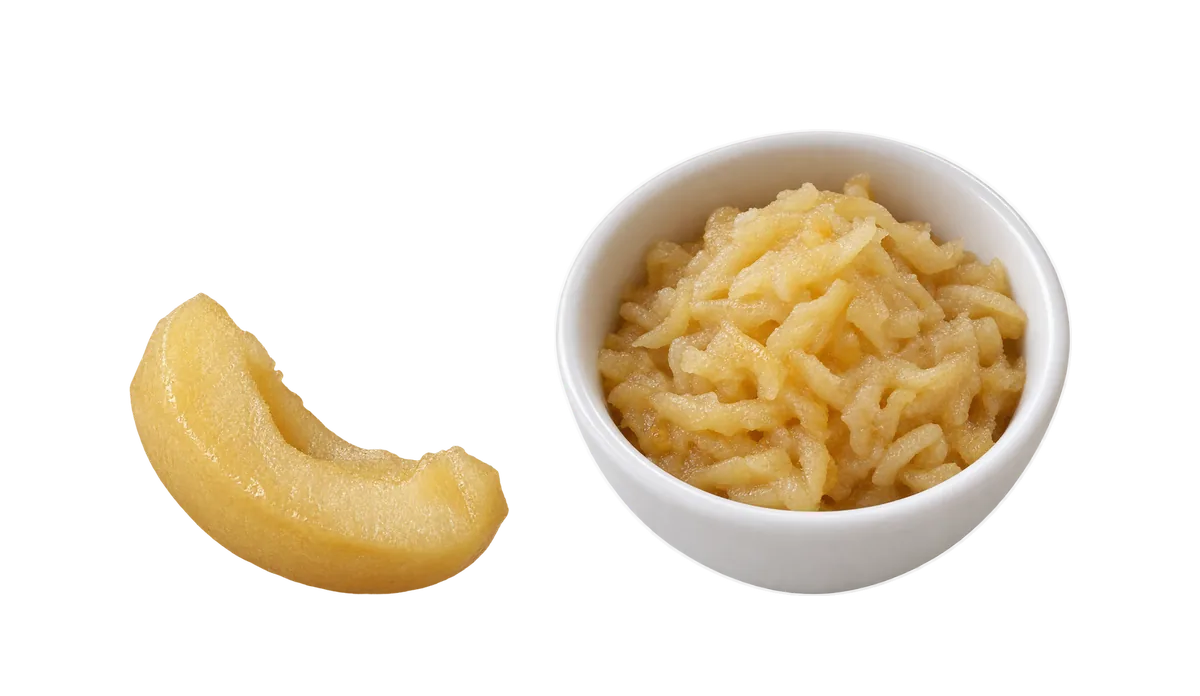
Baked or steamed until it squashes between finger and thumb, in finger-length wedges, peeled and cored, or grated and cooked soft in a bowl. Why so big: babies this age grab with the whole hand, so a finger-sized piece with a bit sticking out of the fist is easiest to hold and gnaw, and gnawing helps them learn to chew. Feeding themselves carries no more risk of choking than being fed with a spoon; always stay with your baby while they eat.
9 to 11 months
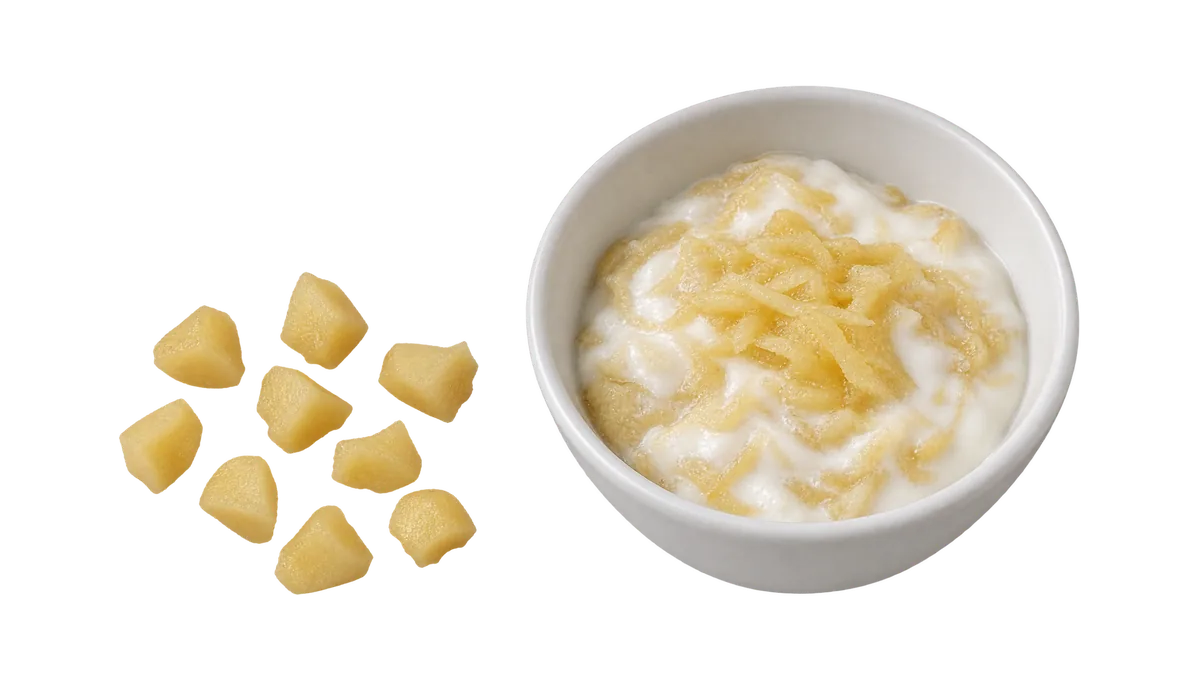
Soft cooked apple in pieces about 1 cm for pinching, or grated and cooked soft, stirred into porridge or yogurt. Why smaller now: between about 9 and 12 months babies learn to pick food up between thumb and finger, and small soft pieces let them practice. Babies who don't move on to lumpy food by about 9 to 10 months are more likely to have feeding difficulties later.
12 months until age 4
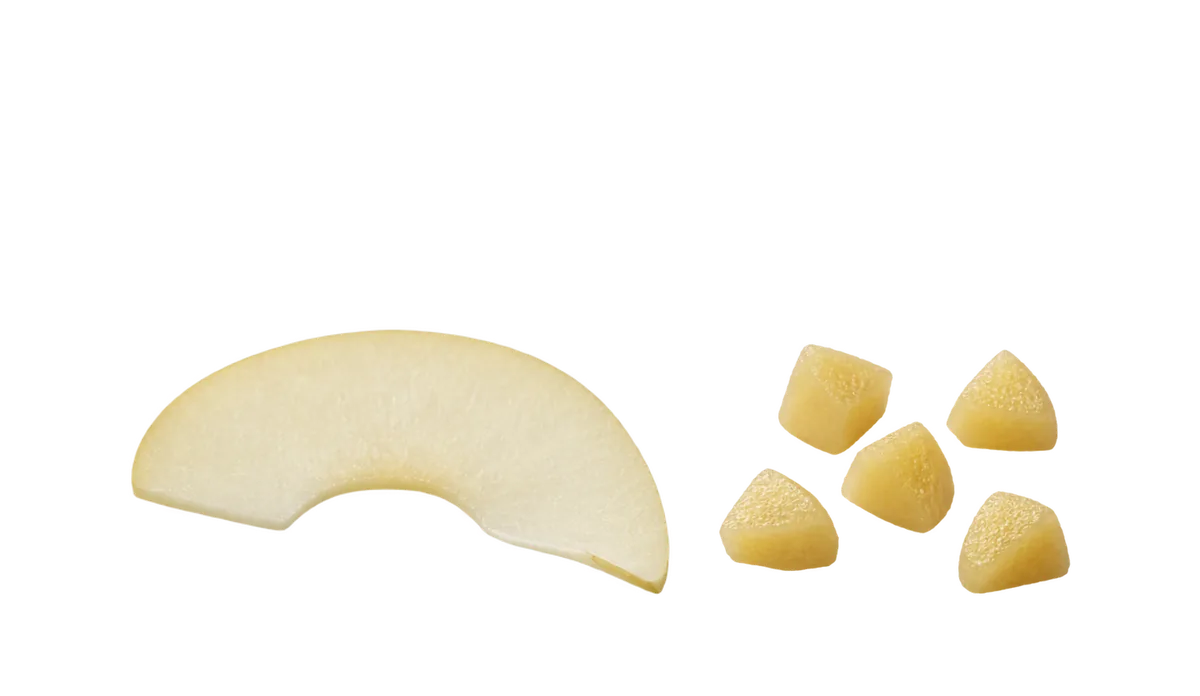
Paper-thin raw slices, skin off, or soft cooked pieces; raw chunks wait until age 4.
Age 4 and up
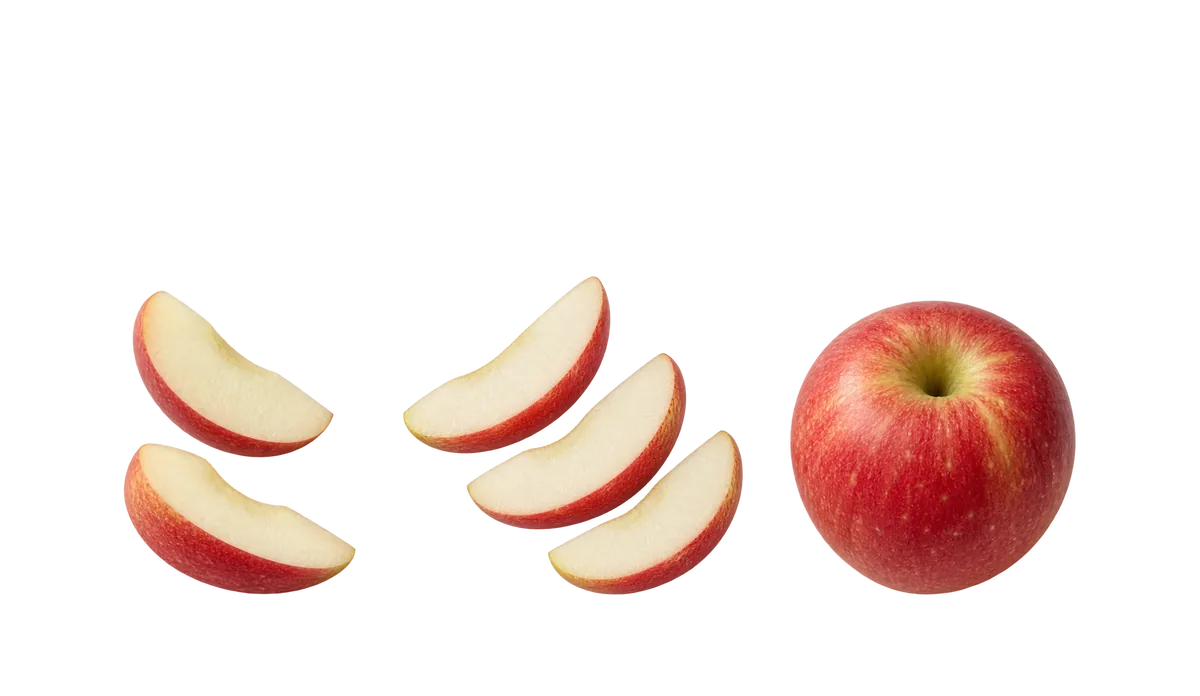
Raw wedges, slices or a whole apple to bite, skin on, once your child chews well; eaten sitting down; keep raw apple paper-thin or cooked soft if not.
Sito shows this card at your baby's exact age, for 583 foods.
Choking: why the shape matters
Why apples are a choking risk: hard when raw. Until age 4, serve them only in the shapes above. The AAP names raw fruit chunks, such as apple pieces among the foods to keep from children under 4.
The AAP also advises supervising mealtimes, having children sit down when they eat, and taking a CPR and first aid course.
Nutrients
USDA figures per 100 g (Apples, raw, without skin): iron 0.07 mg, zinc 0.05 mg, calcium 5.0 mg, vitamin A 2.0 mcg and vitamin C 4.0 mg. Household measures from USDA: 1 whole is about 161 g.
Starting Solids in the Sito app
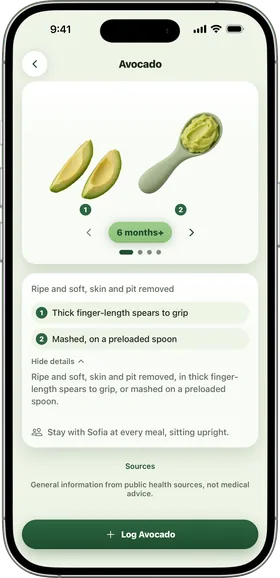
Sito is our app. From 4 months, the home screen is Starting Solids: the signs of readiness, how to serve each of 583 foods at your baby's age, and a quick log for every taste. Spears to grip or mashed on a spoon, each food's card shows the shapes that fit your baby's age, and swipes ahead to how it changes as they grow.
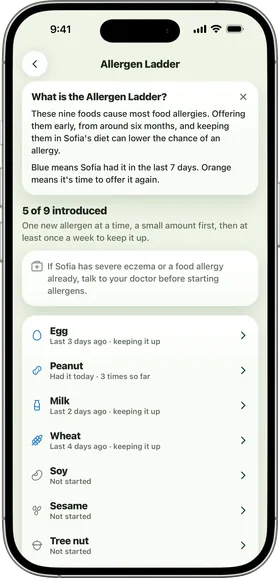
The Allergen Ladder takes 9 common allergens, one at a time, with a check-in after each. At 12 months the full app opens on its own: meals from a photo, 18 nutrients, and how to cut every food until age 4.
Every first food, served right
Add your baby and Starting Solids opens at 4 months.
FAQ
When can babies eat apples?
From 6 months, when your baby starts solids. Apples are a choking risk until age 4, so follow the shape for each age.
How do you cut apples for a 6-month-old?
Baked or steamed until it squashes between finger and thumb, in finger-length wedges, peeled and cored, or grated and cooked soft in a bowl. Why so big: babies this age grab with the whole hand, so a finger-sized piece with a bit sticking out of the fist is easiest to hold and gnaw, and gnawing helps them learn to chew. Feeding themselves carries no more risk of choking than being fed with a spoon; always stay with your baby while they eat.
How do you cut apples for a 9-month-old?
Soft cooked apple in pieces about 1 cm for pinching, or grated and cooked soft, stirred into porridge or yogurt. Why smaller now: between about 9 and 12 months babies learn to pick food up between thumb and finger, and small soft pieces let them practice. Babies who don't move on to lumpy food by about 9 to 10 months are more likely to have feeding difficulties later.
How do you cut apples for a 12-month-old?
Paper-thin raw slices, skin off, or soft cooked pieces; raw chunks wait until age 4.
Sources
- AAP HealthyChildren: Choking Prevention for Babies & Children
- CDC: When, What, and How to Introduce Solid Foods
- CDC: Foods and Drinks to Avoid or Limit
- NHS: Your baby's first solid foods
- NHS: Foods to avoid giving babies and young children
- USDA FoodData Central: Apples, raw, without skin
- AAP HealthyChildren: Movement Milestones: Babies 4 to 7 Months
- CDC: Important Milestones: Your Baby By One Year
- ESPGHAN: Complementary Feeding: A Position Paper by the ESPGHAN Committee on Nutrition (2017)